
The Great Technological Divide
The ultrarunning community has always prided itself on purity. Just you, the trail, and your ability to endure. But as carbon-plated trail shoes have matured from experimental prototypes to race-day staples, that equation is changing. What began with road racing's "super shoe" revolution has now fully infiltrated technical mountain ultras, and the results are impossible to ignore.
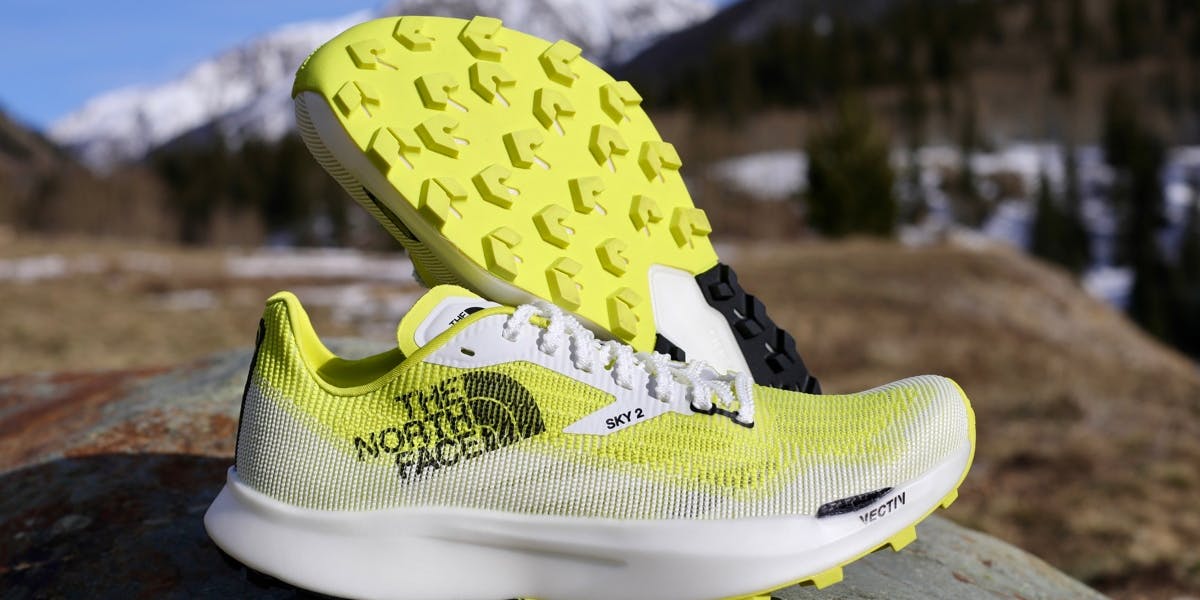
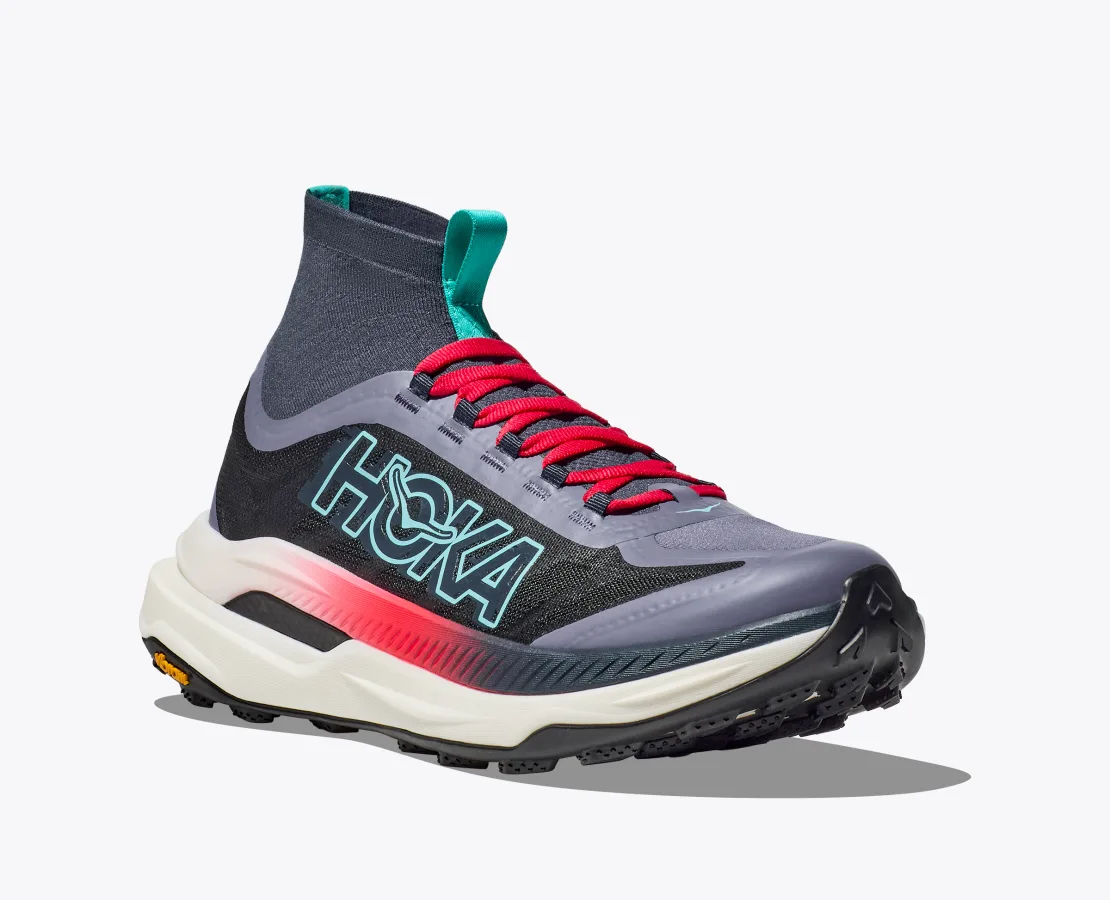
Recent months have seen a cascade of course records across iconic races, with athletes crediting their footwear as much as their training. The HOKA Tecton X 3, Saucony Endorphin Edge, and Nike Ultrafly have become the shoe of choice for elite runners chasing podiums and personal bests. But this technological gear race has sparked one of the most divisive conversations in ultrarunning history: are we witnessing human evolution or equipment-assisted performance?
Numbers Don't Lie: The Performance Gains Are Real
The data emerging from labs and race courses tells a compelling story. Studies suggest that carbon-plated trail shoes can improve running economy by 3-5% on technical terrain. This is a massive advantage in events where an advantage could result in several minutes compiled after dozens of hours. Elite athletes report feeling fresher later in races, maintaining form on descents, and recovering faster between efforts.
At major 100-mile events this past season, finishing times have compressed noticeably. Races that once saw 18-20 hour winning times are now regularly being won in under 16 hours. Mid-pack runners are achieving times that would have placed them on podiums just five years ago.
What Is Carbon Plating?
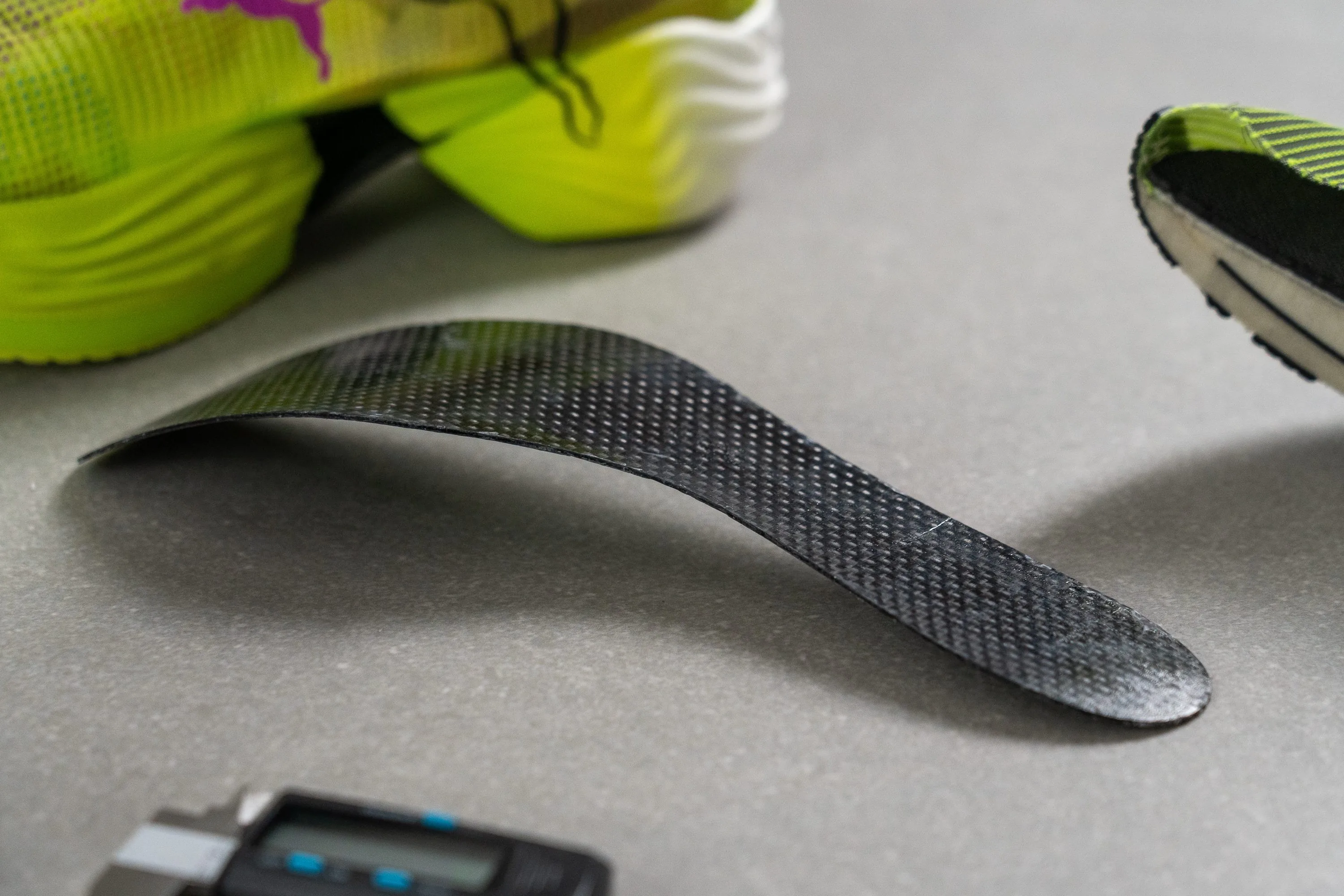
Carbon plating in shoes refers to embedding a thin, stiff plate made of carbon fiber inside the midsole, typically running from the heel toward the forefoot. It's the same basic idea that revolutionized road racing shoes, but adapted to trail and ultra‑running. However, carbon plating isn't necessarily the evolution of rock plates.
Rock plates are made of TPU, nylon, Pebax, or composite plastic and are added in trail shoes for protection from rocks and roots in shoes with thinner midsoles. The carbon plate concept came from the road running world for propulsion. Modern trail midsoles have incorporated PEBA based foams are an amazing addition to ultra shoes for long run cushioning, but the added absorption from the foam results in reduced efficiency. Carbon plates can help stabilize high stack shoes but they also add a spring-like effect to improve efficiency lost from higher stack foams.
Purists Push Back
Not everyone is celebrating the carbon revolution. A vocal contingent of ultrarunners argues that these shoes fundamentally alter what it means to run an ultra. They point to the sport's roots in simplicity and self-reliance, suggesting that increasingly technical equipment moves ultrarunning closer to cycling or skiing, where gear can matter as much as fitness.
Several grassroots events have begun marketing themselves as "traditional footwear only" races, though defining what that means proves tricky. Is it just carbon plates that are banned? What about advanced foam compounds? Where exactly should the line be drawn?
The debate mirrors earlier controversies about trekking poles, hydration vests, and GPS navigation, each innovation initially controversial, eventually normalized. But carbon plates feel different to many veterans, representing a threshold where equipment might fundamentally change competitive outcomes rather than just providing convenience.

What the Brands Are Saying
Footwear manufacturers defend their innovations as natural progression. They argue that carbon plates don't make anyone faster, they simply allow runners to express their fitness more efficiently while reducing injury risk through better energy return and reduced muscle fatigue.
Marketing departments are certainly betting big on the technology. Nearly every major running brand now has multiple carbon-plated trail options at various price points, with new models dropping quarterly. There are whispers of even more advanced materials and geometries in development.
The Injury Paradox
Interestingly, physical therapists and sports medicine specialists report mixed outcomes. Some athletes experience fewer overuse injuries thanks to reduced muscular load and improved running mechanics. Others develop new injury patterns including Achilles issues, calf strains, and metatarsal stress fractures. It's early to discern, but could these be potentially linked to the altered biomechanics these shoes create?
The consensus emerging among medical professionals is that carbon-plated shoes aren't inherently good or bad, they're simply different, requiring adaptation and potentially changing injury risk profiles rather than eliminating risk altogether. Runners transitioning to plated shoes need deliberate adaptation periods and may need to adjust their training approaches.
Looking Ahead: Where Do We Go From Here?
The carbon plate debate isn't going away. If anything, it's intensifying as the technology becomes more prevalent and performance gaps widen. Several scenarios seem possible:
Mass adoption becomes the norm: Just as no serious road marathoner would race without super shoes today, carbon-plated trail shoes become standard equipment across all competitive levels, with prices eventually dropping through market forces and availability.
Regulatory intervention: Major ultra series like UTMB or Western States establish equipment standards, potentially creating "open" and "traditional" categories similar to cycling's approach with different bike classifications.
Natural segmentation: The sport splits informally, with some events embracing technology while others market themselves as back-to-basics experiences, allowing runners to self-select their preferred philosophy.
The next innovation makes this one obsolete: Something new, perhaps quick swap cushioning to allow fresh shoes at every aid station makes carbon plates seem quaint, restarting this entire conversation.
The Bigger Question
Ultimately, the carbon plate debate forces ultrarunners to confront deeper questions about what they value in the sport. Is ultrarunning about absolute performance, running as fast as humanly possible across challenging terrain or is it about something more philosophical, testing yourself with minimal assistance and enduring suffering as part of the experience?
There's no single answer, and that's probably healthy. Ultrarunning is big enough to accommodate different motivations and approaches. The runner chasing a course record and the runner seeking spiritual transcendence on a mountain traverse can coexist, even if they're wearing very different shoes.
What seems certain is that 2025 kicked off a new stage of gear revolution in ultrarunning. In 2026, course records will continue falling and debates will rage on social media and at aid stations. Through it all, runners will keep showing up at starting lines, drawn by something deeper than equipment. The primal urge to see what they're capable of when pushed to their limits.
The shoes might be new, but that fundamental drive to overcome perceived limits remains beautifully, stubbornly human.