
A Sport Transformed: Women's Participation in Ultrarunning
Twenty years ago, women at the starting line of an ultramarathon were a distinct minority. Today, the landscape has fundamentally transformed. Recent comprehensive research reveals that women's participation in ultrarunning has not only increased, it has exploded, fundamentally changing the demographics and culture of the sport.
The Numbers Tell a Compelling Story
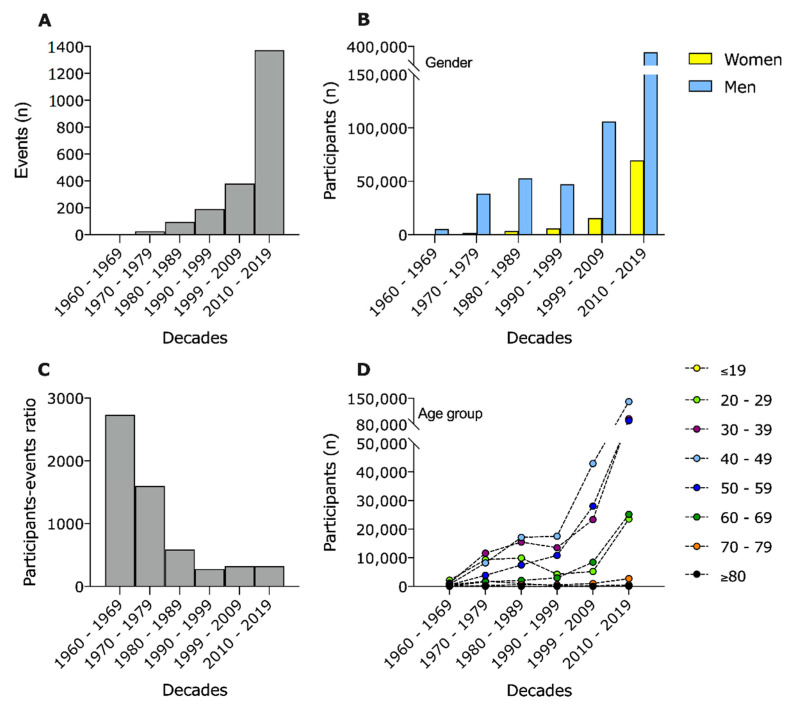
A landmark study published in Scientific Reports examined over 1,100,000 race records from Switzerland spanning two decades (1999-2019), providing unprecedented insight into participation trends across running distances from 5km to ultra-marathons.
The findings reveal a consistent pattern: women's participation has grown progressively across all distances, but the growth trajectories differ significantly based on race distance.
Short Distance Running: Women Leading the Way
In shorter distances, women have not just achieved parity, they've taken the lead. The Swiss data shows that in 5km races, female runners actually outnumber male runners. This represents a complete reversal from historical patterns where running events were predominantly male-dominated.
Key findings for shorter distances:
- Women are more prevalent in 5km, 10km, and half-marathon distances
- The male-to-female ratio generally decreased across all race distances over the study period
- Women's participation growth has been more progressive than men's across the board
The Ultra-Marathon Participation Gap
While women have achieved remarkable growth in shorter distances, ultra-marathons present a different picture. The research indicates that "as the race distance increased, the male-to-female ratio declined," meaning women represent a smaller proportion of participants in longer ultra events.
However, this gap has been steadily closing. The data shows that the male-to-female ratio has decreased over the years even in ultra-marathons, indicating growing female participation in these extreme-distance events.
Historical Context: From Exclusion to Explosion
To understand the magnitude of this change, we must consider the historical barriers women faced. Research from 2016 examining ultra-marathon running from 1975-2013 provides crucial historical context.
This comprehensive study analyzing 32,187 finishers with 93,109 race finishes across timed ultra-marathons (6, 12, 24, 48, 72, 144, and 240 hours) revealed several critical patterns:
Age-Related Participation Patterns
The research found that "in all durations of ultra-marathon, the participation of women and men varied by age (p < 0.001), indicating a relatively low participation of women in the older age groups."
This pattern reflects generational differences in women's access to endurance sports. Older cohorts of women grew up in eras when their participation in extreme endurance events was discouraged or outright prohibited, while younger generations face fewer cultural barriers.
The Participation-Performance Relationship
A fascinating finding from the historical data: "The sex difference in running speed was largest when there were fewer women than men finishers in a race." This suggests that when more women participate in an event, the overall depth of female competition improves, likely due to increased training resources, community support, and competitive motivation.
Geographic and Cultural Variations
While the Swiss data provides comprehensive insights into European participation trends, global patterns show both similarities and differences. The participation growth has been particularly pronounced in:
- North America: Significant growth in women's ultra participation, particularly in trail running events
- Europe: The Swiss study exemplifies broader European trends of steadily increasing female participation
- Asia: Emerging ultra-marathon cultures showing strong initial female participation rates
Understanding the Drivers of Growth
1. Cultural Shifts and Changing Perceptions
The last two decades have witnessed fundamental shifts in cultural attitudes toward women in endurance sports. The myth that women were "too weak" for ultra-distance running, a belief that persisted well into the 1990s, has been thoroughly debunked by both scientific research and performance data.
2. Community and Social Support
The growth of women-focused running groups, online communities, and female-specific training resources has created supportive ecosystems that encourage participation. Social media has amplified these communities, making ultrarunning more accessible and less intimidating for newcomers.
3. Representation Matters
Increased visibility of elite female ultra-runners has created role models and demonstrated what's possible. When women see other women successfully completing 100-mile races, psychological barriers to entry diminish.
4. Race Organization and Accessibility
Race directors have increasingly recognized female participants as a growth market, leading to:
- More female-friendly race logistics (aid station amenities, longer cutoff times for first-time ultra-runners)
- Women-specific categories and awards
- Marketing that specifically targets female runners
- Mentorship programs pairing experienced female runners with newcomers
Age Group Analysis: Where Women Are Making the Biggest Gains
The Scientific Reports study revealed that "the male-to-female ratio generally decreased in all race distances over the years," but this decrease wasn't uniform across age groups.
Younger Age Groups (18-40 years)
The most dramatic participation increases have occurred among younger women. This cohort has grown up in an era where women's participation in extreme endurance sports is normalized, leading to:
- Higher baseline participation rates
- Earlier entry into ultra-distance running
- Greater willingness to tackle longer ultra distances
Middle Age Groups (40-60 years)
This demographic has shown steady, consistent growth. Many women in this age range are discovering ultra-running after establishing careers and families, viewing it as a personal challenge and form of self-care.
Older Age Groups (60+ years)
While historically showing the lowest female participation rates, this age group is experiencing accelerating growth. The historical research noted "a relatively low participation of women in the older age groups," but recent trends suggest this gap is closing as societal attitudes continue to evolve.
The Evolution Across Different Ultra Distances
Analysis of participation trends across various ultra-marathon distances reveals distinct patterns:
50km to 100km Events
These "entry-level" ultra distances have seen the most substantial female participation growth, likely because:
- They represent a logical progression from marathon training
- Time commitments for training are more manageable
- They feel more achievable to first-time ultra-runners
100-Mile Events
While still male-dominated, 100-mile races have experienced steady increases in female participation. The 2016 study examining ultra-marathons from 1975-2013 found that women were able to reduce the participation gap in certain timed ultra-marathons where they had "relatively high participation."
Multi-Day and Extreme Ultra Events
Events lasting 24 hours or longer, or covering distances beyond 100 miles, still show the largest male-to-female participation ratios, but even these extreme distances are seeing gradual increases in female participation.
The Impact on Race Culture and Community
The surge in female participation hasn't just changed the numbers, it has transformed the culture of ultrarunning itself:
More Inclusive Race Environments
- Race communications and marketing have become more inclusive
- Women-specific training groups and coaching programs have proliferated
- Online communities provide support and advice
- Mentorship opportunities connect experienced female ultra-runners with newcomers
Media Coverage and Sponsorship
- Increased media attention to female ultra-runners
- Growing sponsorship opportunities for elite female athletes
- More balanced coverage of race results highlighting both male and female achievements
Remaining Challenges and Future Directions
Despite remarkable progress, challenges remain:
The Ultra-Distance Gap
While women have achieved near-parity in shorter running distances, significant participation gaps persist in ultra-marathons, particularly in extreme-distance events. Closing this gap will require:
- Continued cultural shift normalizing female participation in extreme endurance
- More female-specific training resources for ultra distances
- Greater representation of female ultra-runners in media
- Addressing logistical barriers (longer time commitments, family responsibilities)
Age Group Disparities
The historical data showed that older age groups had disproportionately low female participation. While this is improving, targeted efforts are needed to encourage and support women entering ultra-running later in life.
Intersectionality and Diversity
Most research and discussion focuses on overall female participation, but important questions remain about representation across:
- Racial and ethnic diversity among female ultra-runners
- Socioeconomic accessibility barriers
- Geographic disparities (urban vs. rural, developed vs. developing nations)
- Body size and type diversity
The Trajectory Forward: What the Data Suggests
Based on the comprehensive research examining participation trends from 1975-2019, several projections emerge:
Continued Growth Across All Distances
The consistent trend of decreasing male-to-female ratios suggests this pattern will continue, particularly as younger cohorts with fewer cultural barriers age into peak ultra-running years.
Accelerating Growth in Longer Ultras
As the participation-performance relationship study indicated, when more women participate in a distance, it creates a positive feedback loop. We can expect accelerating growth in 100-mile and multi-day events as critical mass is achieved.
Potential for Parity in Shorter Ultras
Given that women already outnumber men in 5km races and show strong participation in half-marathons, achieving gender parity in 50km ultra-marathons appears likely within the next decade.
Implications for Race Directors and the Industry
The increase in female participation creates both opportunities and responsibilities for race organizers:
Opportunities
- Market Growth: Female participants represent a significant and growing market segment
- Community Building: Women often bring strong community-building skills to running groups
- Family Participation: Female participants may bring family members as crew, pacers, or spectators
- Diverse Event Offerings: Growing female participation opens possibilities for varied event formats and distances
Responsibilities
- Safety: Ensuring safe, inclusive race environments for all participants
- Representation: Including female voices in race planning and decision-making
- Accessibility: Addressing barriers to entry (cost, logistics, training resources)
- Recognition: Providing equitable prize structures and media attention
Conclusion: A Sport Transformed
The research examining over 1.1 million race records across two decades reveals that women's participation in ultrarunning has certainly undergone a dramatic transformation. From initial exclusion to now comprising the majority of participants in shorter distances, women have fundamentally reshaped the sport.
The Scientific Reports study documented that "the male-to-female ratio generally decreased in all race distances over the years," with women showing "more progressive increase in the number of female runners compared to the number of male runners."
While challenges remain, particularly in closing the participation gap in ultra-distances and older age groups, the trajectory shows that as cultural barriers continue to fall, training resources expand, and communities grow stronger, women's participation in ultrarunning will continue to increase.
The story of women in ultrarunning over the past 20 years isn't just about participation numbers, it's about possibility, perseverance, and the power of challenging outdated beliefs about what women can achieve. As we look forward, the question isn't whether women will continue to increase their presence in ultrarunning, but rather how quickly the remaining participation gaps will close.
For race directors, coaches, brands, and the ultrarunning community at large, the message is clear: the future of ultrarunning is increasingly about gender equity, and embracing this reality will benefit everyone in the sport.
Research Cited
- Elderly female ultra-marathoners reduced the gap to male ultra-marathoners in Swiss running races - Scientific Reports (2023)
- Do women reduce the gap to men in ultra-marathon running? - SpringerPlus (2016)
- Running Endurance in Women Compared to Men: Retrospective Analysis of Matched Real-World Big Data - Sports Medicine (2023)
- Sex Differences Between Women and Men in Running - Springer (2022)